
Jump to:
Japanese people use different words for rice depending on its form and context.
- Kome (米) refers to uncooked rice (the grain).
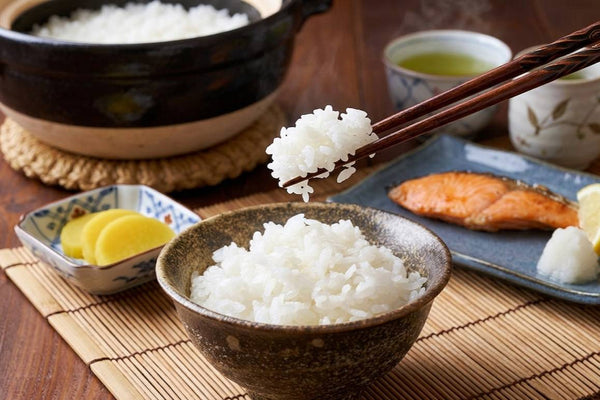
- Gohan (ご飯) means cooked rice and, by extension, a meal.
- Raisu (ライス), a loanword, is used in Western-style dishes and in restaurants to refer to a serving of plain rice.
In this article, you’ll learn how rice is understood in the Japanese language and culture, why it holds deep historical and spiritual significance, the different words used depending on context, popular rice dishes, key Japanese rice varieties, and the best ways to cook rice.
Significance of Rice in Japan

Spring in the Rice Fields, Katsushika Hokusai, Japanese, ca. 1800, via The Metropolitan Museum of Art
In Shinto belief, rice is seen as a deity or as carrying the divine spirit. Myths link it to Amaterasu, who gifted rice to humanity, making it sacred.
A traditional saying captures this idea: “one grain of rice contains seven gods” (一粒に七神). This does not refer to specific deities, but to a core Shinto concept—that divine spirits (kami) exist in all things.
The “seven” represents the many visible and invisible forces behind a single grain of rice:
- Sun (growth and energy)
- Water (rain, irrigation)
- Soil (nutrients)
- Wind (climate balance)
- Farmers who plant and harvest
- People who process and transport the rice
- Those who cook and prepare it
In this context, “seven” means completeness rather than a literal number. It reflects abundance and interconnected effort, similar to how the Seven Lucky Gods symbolize collective good fortune.
Rice is central in rituals, where it is offered to the gods and ancestors. Products like mochi and sake (rice wine) are shared between people and deities, reinforcing connection and community. Sake, in particular, plays a key role in social bonding, as it is poured and shared, symbolizing unity, respect, and the continuous flow of relationships.
Historically, rice cultivation was introduced to Japan around 500 to 400 BCE and became the foundation of society and governance. Early rulers were both political leaders and ritual figures responsible for ensuring good harvests, linking rice directly to power and divine authority. Over time, rice evolved from a staple food into a symbol of national identity, with rice paddies representing land, community, and continuity across generations.
During the Edo period and beyond, rice also shaped social structure and economy, often used as a measure of wealth and status. Even as Japan modernized and diversified its diet, rice remained central to cultural identity.
Different Words Used for Rice in Japanese
This deep historical and cultural importance is also embedded in the language. The Japanese use several words for “rice” because the grain plays different roles in everyday life, and each form carries its own nuance.
Kome refers to the raw grain; the rice you wash, measure, and store.
Once cooked, it becomes gohan, a word so central that it also means “meal.” The idea appears directly in daily vocabulary: asagohan (morning rice) for breakfast, hirugohan (noon rice) for lunch, and bangohan (evening rice) for dinner. Note that Japanese will still refer to breakfast as Asagohan even if the meal contains, for example, toast rather than rice.
By contrast, raisu is used for Western-style servings of rice, such as curry rice or plated dishes.
Rice, Rice, Everywhere!

Rice finds its way into an astonishing variety of everyday dishes in Japan. Here are some popular dishes in Japan.
Everyday Rice Dishes
- Onigiri – Grilled rice balls or rice balls with fillings like tuna, salmon, or pickled plum
- Donburi – Rice topped with meat, fish, or eggs
- Tamago Kake Gohan – Raw egg mixed into hot rice with soy sauce
- Ochazuke – Rice with green tea and toppings
Sushi & Seafood
- Sushi – Vinegared rice with fish or vegetables
- Chirashi Sushi – Sushi rice topped with assorted ingredients
Comfort & Hearty Meals
- Kare Raisu – Rice with thick Japanese curry
- Oyakodon – Chicken and egg over rice
- Gyudon – Thinly sliced beef over rice
- Katsudon – Fried pork cutlet with egg on rice
Fried & Mixed Rice
- Chahan – Stir-fried rice with egg, meat, and vegetables
- Takikomi Gohan – Rice cooked with vegetables, meat, or mushrooms
Special & Traditional
- Sekihan – Sticky rice with azuki red beans, eaten for celebrations
- Mochi – A chewy rice cake used in sweets and rituals
Best Japanese Rice

Japan grows a variety of rice, each valued for its sweetness, aroma, stickiness, and texture. The right rice can shape both flavor and eating experience.
- Koshihikari – Premium, glossy, slightly sticky; ideal for sushi, onigiri, and everyday meals.
- Akitakomachi – Firm, subtly sweet; great for simple meals and bento.
- Hitomebore – Plump and moderately sticky; perfect for donburi, curry rice, and comfort foods.
- Nanatsuboshi – Light, fluffy, less sticky; suited for fried rice and mixed-grain dishes.
- Haenuki – Firm and chewy; holds shape for onigiri, sushi, and lunchboxes.
Cooking Japanese Rice

To get perfect, glossy rice in a cooker, follow these 3 key steps:
1. Wash & Polish: Rinse the rice 3–4 times until the water is clear. Use a gentle "scrubbing" motion with your hand to remove excess starch. If your bowl has no lines, use 1 part rice to 1.1 parts water.
2. Soak: After adding water to the fill line, let the rice sit for 30 minutes before hitting start. This ensures the core of each grain cooks through.
No-Soak Alternative: Use the "Quick Cook" mode and add 1-2 extra tablespoons of water to help the grains hydrate faster during the heat cycle.
3. Fluff: As soon as it's done, open the lid and "cut" through the rice with a paddle to release steam. This prevents it from getting mushy.
There are several ways to cook Japanese rice, each with its own advantages depending on convenience, control, and experience level.
Cooking Japanese rice in a rice cooker is the most reliable and convenient method. It delivers consistently fluffy results with minimal effort and can keep rice warm for hours without drying out.
Cooking Japanese rice in a pot on the stove offers more control over texture and is ideal for those who prefer a hands-on, traditional approach. While it can produce excellent results, it requires careful timing and attention to avoid burning or uneven cooking.
The Heart of the Japanese Table
Rice is more than just food in Japan; it is part of culture, history, and daily life. Words like kome, gohan, and raisu show how rice is understood in different ways. Learning about its varieties and how to cook it lets you enjoy a true taste of Japan at home.
Have you tried Japanese rice? What’s your favorite way of cooking it, and how is it different from the rice in your home country? Tell us in the comments!


0 comments